

Do you feel lost, even though you’re doing everything you’re “supposed” to do?
You show up for your friends. You excel at your job. You help whenever someone asks, even when your schedule is already overflowing. You go out of your way to keep the peace and avoid even the slightest hint of conflict. From the outside, your life looks like a well-oiled machine. You are reliable, helpful, and seemingly in control.
But inside, something feels deeply off.
You wake up most mornings wondering what happened to your own goals, your own passions, and your own sense of direction. You spend so much time navigating the expectations of your spouse, your children, your boss, and your friends that you have effectively lost touch with the person living inside your own skin.
If you feel lost, people-pleasing is likely the hidden architect of that confusion.
Many people-pleasers operate under the false assumption that being “good” means being “accommodating.” They don’t realize that constantly prioritizing others, at the expense of the self, comes with a heavy, hidden tax. Over time, saying “yes” when your gut is screaming “no,” ignoring your physical exhaustion, and seeking external validation as a baseline for your self-worth will leave you emotionally hollowed out.
The good news? Feeling lost is not a permanent state; it is a signal. In this comprehensive guide, we will dismantle the machinery of people-pleasing and provide five practical steps to help you reclaim your identity.
The Hidden Mechanics: Why Do You Feel Lost?
When you search for answers regarding why you feel lost, you are often looking for a grand, external explanation. You might blame your career, your current relationship, or a recent life transition. While those factors certainly play a role, the root cause is almost always internal:
You have become a secondary character in your own life.
People-pleasing is not a personality trait; it is a survival strategy. It is often a learned behavior, something you picked up in childhood to stay safe, gain love, or maintain harmony. However, as an adult, this strategy backfires. It trains your brain to prioritize external feedback over internal intuition.
The Feedback Loop of Disconnection
EvEvery time you ask yourself, “How can I make them happy?” rather than “What do I need right now?” you widen the gap between who you are and who you present to the world.
The External Focus: You are hyper-vigilant about the moods, needs, and opinions of others.
The Internal Silence: Your own needs are relegated to the bottom of the “to-do” list, often buried under layers of guilt.
Over time, this creates a state of “identity erosion.” You stop making decisions based on your values and start making them based on the path of least resistance. Eventually, you wake up and realize you don’t even know what you like for breakfast, let alone what you want for your future.
The Hidden Costs of Constant Compliance
We often view people-pleasing as a virtue. We call it “kindness,” “service,” or “selflessness.” While these are noble traits, they are only healthy when they are sustainable. When they become a compulsive need for validation, the costs to your mental and physical health become staggering.
1. Chronic Emotional Exhaustion
Managing the emotions of others is a full-time job you never applied for. When you feel responsible for everyone else’s comfort, you are constantly monitoring the room. This hyper-vigilance keeps your nervous system in a state of low-grade stress, leading to burnout that rest alone cannot fix.
2. The Mirage of Low Self-Confidence
People-pleasers often struggle with unstable self-esteem. Because your sense of worth is tethered to whether or not people are “pleased” with you, your confidence fluctuates wildly based on the moods of others. If someone is disappointed, you feel like a failure. This makes you pathologically dependent on external feedback.
3. The Slow Poison of Resentment
There is a secret ledger in every people-pleaser’s mind. You track all the favors you do, all the times you swallowed your pride, and all the times you said “yes” when you wanted to stay in bed. When others don’t reciprocate, or when they don’t notice your sacrifice, deep-seated resentment begins to rot your relationships from the inside out.
4. Loss of Identity
When you tailor your personality to fit the expectations of whoever you are with, you eventually stop knowing who you are when you are alone. If you feel lost, it is because your “self” has been sacrificed to keep others comfortable.
Step 1: Recognize the Subtle Signs of People-Pleasing
You cannot heal what you do not acknowledge. Many people-pleasers are so deeply conditioned that they don’t even realize they are doing it. They view their behavior as “just being a good person.”
To break the cycle, you must move from unconscious behavior to conscious awareness.
The People-Pleaser’s Checklist
Ask yourself the following questions with radical honesty:
- The Apology Reflex: Do you find yourself saying “I’m sorry” for things you didn’t do, or even for simply taking up space?
- The “No” Guilt: Does your stomach tighten when you have to say no, even to something small?
- The Chameleon Effect: Do you change your opinions or interests based on who you are talking to so that you don’t cause friction?
- The Perfectionist’s Burden: Are you terrified of making a mistake because it might cause someone to think less of you?
- The Emotional Sponge: Do you feel responsible for fixing the bad moods of your partner, children, or colleagues?
Actionable Insight: For the next three days, keep a “People-Pleasing Log” in your phone. Every time you say “yes” when you want to say “no,” or every time you apologize for something that wasn’t your fault, write it down. Just noting the behavior creates the necessary distance to change it.
Need help navigating the guilt of saying no? Explore our free resource for women who struggle with boundary-setting: [Free Boundary Resource]
Step 2: Reconnect with Your Authentic Desires
When you have spent years living for others, the question “What do I want?” feels intimidating. You have lost the “muscles” of self-preference. Reclaiming your identity requires a slow, intentional process of re-discovery.
The “Micro-Choice” Strategy
You don’t need a massive life overhaul to start reconnecting. Start with the small, low-stakes decisions that you usually defer to others.
- The Dinner Test: The next time you are ordering food or planning a meal, decide what you want to eat before asking anyone else’s opinion.
- The Hobby Audit: What did you love doing when you were 10 years old? Did you like to draw? Climb trees? Read sci-fi? Reintroduce one of those elements into your week.
- The “If No One Was Watching” Question: When you consider a career move or a lifestyle change, ask yourself: “If I knew nobody would judge me—if I knew my family and friends would be 100% supportive regardless of my choice—what would I choose?”
The goal here isn’t to be selfish; it’s to be self-aware. You cannot show up authentically for others if you aren’t showing up for yourself first.
Step 3: Master the Art of the “Clean No”
Saying “no” is the most powerful tool in your arsenal, yet it is the one you are likely most afraid to use. Many people-pleasers believe that a “no” is an act of aggression. They confuse setting a boundary with being mean.
In reality, a “no” is an act of integrity. When you say “yes” to something you don’t want to do, you are being dishonest with the other person and resentful toward yourself.
The Framework for a “Clean No”
A “clean no” is direct, kind, and doesn’t over-explain. Over-explaining is a sign that you are looking for permission, which gives the other person space to argue with your boundaries.
- The “Thanks, But No” Method: “I appreciate the invite, but I won’t be able to make it.”
- The “Priorities” Method: “That sounds like a great project, but my current capacity is full and I can’t take on anything else right now.”
- The “Alignment” Method: “That doesn’t really align with my goals right now, but thank you for thinking of me.”
Important: You do not need to justify your existence or your schedule. A simple, firm, and kind “no” is sufficient.
Feeling like you need more practice with boundaries? Join our supportive community of women: [Facebook Support Group]
Step 4: Stop Seeking Permission to Exist
A massive part of why you feel lost is because you are treating your own life like a proposal that needs to be approved by a committee. You look at your friends, your parents, or society at large to confirm that your choices are “correct.”
The Danger of Approval Addiction
When you seek permission, you give away your power. You are essentially saying that someone else is the expert on your life. But here is the truth: Nobody knows what you need better than you do.
To stop seeking permission:
- Identify Your Values: Write down your top three core values (e.g., Freedom, Honesty, Creativity).
- The Value Check: Before making a decision, ask if it aligns with those three values. If it does, you don’t need external validation.
- Accept Disappointment: You must accept that you cannot live an authentic life and keep everyone happy at the same time. Someone will eventually be disappointed by your choices. That is a sign that you are finally living for yourself.
Step 5: Become the Guardian of Your Energy
People-pleasers treat their energy like a public utility that is free for everyone to tap into. They offer their time, their emotional labor, and their physical effort to anyone who asks, only to end the day feeling hollowed out.
Energy Mapping
To stop feeling lost, you must become the strict guardian of your own energy.
- Identify Drains: Who or what leaves you feeling depleted? Is it a specific friendship where you only talk about their problems? Is it a work commitment you hate?
- Identify Energizers: What or who leaves you feeling lighter?
- The 80/20 Energy Rule: Make a conscious effort to dedicate 80% of your energy to things that nourish your soul or align with your long-term vision, and only 20% (or less) to the “maintenance” tasks of life.
Protecting your energy is not about becoming a hermit. It is about being intentional. When you are rested and aligned, you are a better friend, a better parent, and a better partner, because you are giving from your overflow, not from your empty reserves.
Is your energy leaking away into other people’s problems? Learn how to stop the cycle: [Energy Awareness Coaching]
Navigating the Midlife Crossroads
If you are reading this and find yourself in the “middle” stages of life, you might feel a specific, acute sense of being lost. This is often the time when the roles you’ve played—mother, daughter, employee—start to shift. The kids grow up, parents age, and careers plateau.
This “midlife transition” is actually the perfect time to reset. For decades, you may have been the person who kept the family afloat or the office running. Now, the space has opened up. Instead of rushing to fill it with more obligations, use this time to ask: “What is left for me?”
This is not a crisis; it is a metamorphosis. It is the moment where you get to decide that your second act will be driven by your desires rather than other people’s expectations.
Practical Daily Exercises for Reclaiming Yourself
- The 5-Minute Morning Check-In: Before you check your phone or emails, sit for five minutes. Ask: How do I feel? What do I actually need today?
- The “One-Honest-Action” Rule: Perform one action today that is entirely for you. It could be reading a chapter of a book, taking a walk, or simply deciding to listen to your favorite music in the car instead of a podcast you think you “should” be learning from.
- The “Maybe” Buffer: If someone asks you to do something, stop saying “yes” immediately. Use this phrase: “Let me check my calendar and get back to you.” This gives you the space to decide if you actually have the energy to do it.
When Feeling Lost Becomes an Opportunity
We often equate feeling lost with being “stuck.” But what if feeling lost is actually a sign of growth?
If you were still fitting perfectly into your old life, you wouldn’t feel lost. You feel lost because you have outgrown the old container. Your soul is asking for more, but your habits are still trying to keep you small and compliant.
Take the “lost” feeling as an invitation. It is a blinking cursor on a blank page. It is a sign that you are ready to write a new chapter—one where you are the protagonist, not the supporting cast member.
When Additional Support Can Help
If you’re ready to stop people pleasing and build stronger self-worth, these resources may help:
Coaching Services
There comes a point when reading articles and watching videos isn’t enough.
Sometimes you need personalised guidance.
If you’re ready to explore what’s keeping you stuck and develop a practical path forward, consider booking a discovery session:
Coaching can help you uncover hidden blocks, strengthen confidence, and create sustainable change.

A Structured Reset for Burnout Recovery
If you feel burnout has become a recurring pattern, a more structured approach may be beneficial.
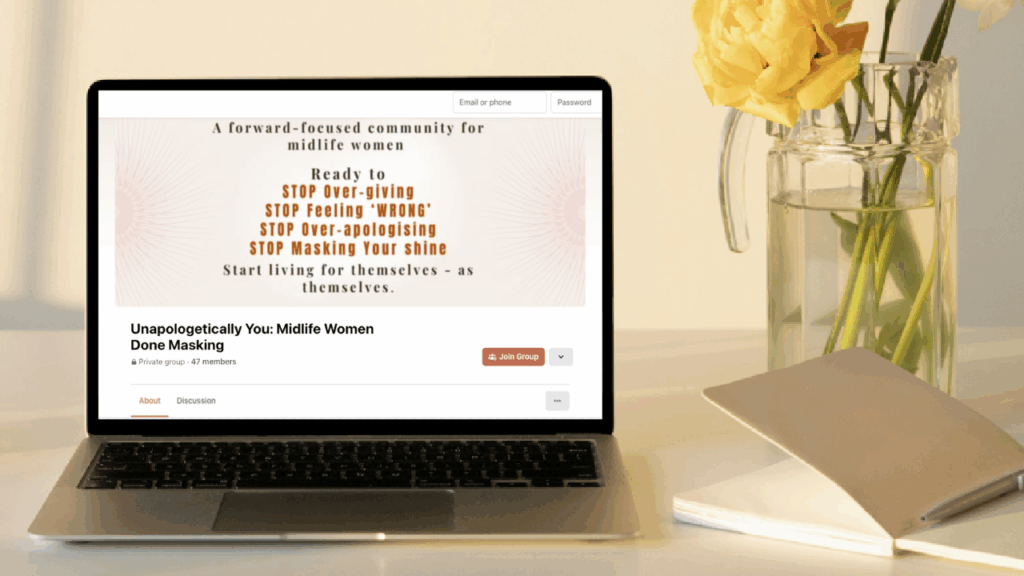
You may find value in joining this supportive community:
Healing from people pleasing can feel much easier when you’re surrounded by people who understand your experiences. Connecting with others who are learning to find calm, set boundaries, and stop overgiving can provide encouragement, accountability, and inspiration on your journey.
You can also complete this reflection tool:
Sometimes the hardest part is recognizing how deeply people pleasing has affected your life. This self-assessment can help you identify patterns that may be keeping you stuck in exhaustion, overwhelm, and self-doubt. Understanding where you are now is often the first step toward meaningful change.
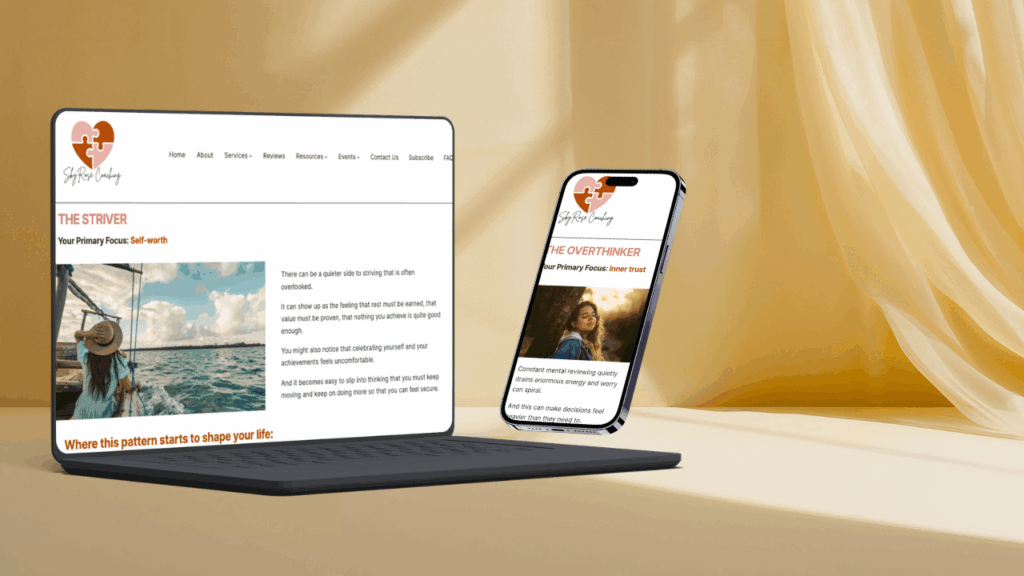
If you’re looking for additional guidance, this video explores the impact of people pleasing and offers practical insights into setting healthier boundaries. Watching and learning from others can help you gain clarity and confidence as you begin making changes in your own life.
Frequently Asked Questions (FAQ)
1. Why do I feel lost even when my life looks “perfect” on the outside?
Feeling lost is not about your external circumstances. It is about your internal alignment. If you have spent your life checking boxes for other people (career, house, relationships) without consulting your own inner compass, you will inevitably feel like you are living someone else’s life.
2. Is people-pleasing actually the reason I feel lost?
Yes. People-pleasing prevents you from forming a solid identity. When you mirror the needs of everyone around you, your own personality gets suppressed. Reclaiming your “yes” and “no” is the fastest way to start finding yourself again.
3. How do I stop being a people-pleaser without hurting my relationships?
You might be surprised to find that your relationships actually improve when you set boundaries. Authentic relationships are built on respect. When you show up as an honest person—one who can say no when needed—you create space for others to be honest with you, too.
4. What is the difference between being “nice” and being a “people-pleaser”?
Being nice is a choice; people-pleasing is a compulsion. Nice people have boundaries. People-pleasers do not. Being nice feels good; people-pleasing feels draining.
5. Where can I get more structured help?
If you feel that these patterns are deeply ingrained, working with a coach can drastically shorten your learning curve.
[Book a Discovery Call]
[Explore the 21-Day Energy Reset Program]
Final Thoughts: The Journey Back to You
If you feel lost, take a deep breath. You are not broken. You are simply in a period of recalibration.
The process of ending people-pleasing is not about becoming a heartless or selfish person. It is about becoming a whole person. It is about realizing that your needs, your dreams, and your peace of mind are just as valid as anyone else’s.
You have spent years giving your light away to brighten the paths of others. It is time to let that light shine on your own path. Start with one boundary, one “no,” and one moment of radical honesty with yourself.
The person you are searching for hasn’t left; she has simply been waiting for you to create enough space for her to step back into the light.
What is the one thing you want today? Start there.ling, mindfulness, and goal-setting to regain clarity, confidence, and direction.